Q1: What inspired you to choose the "snow monkey" as the main subject of this piece?
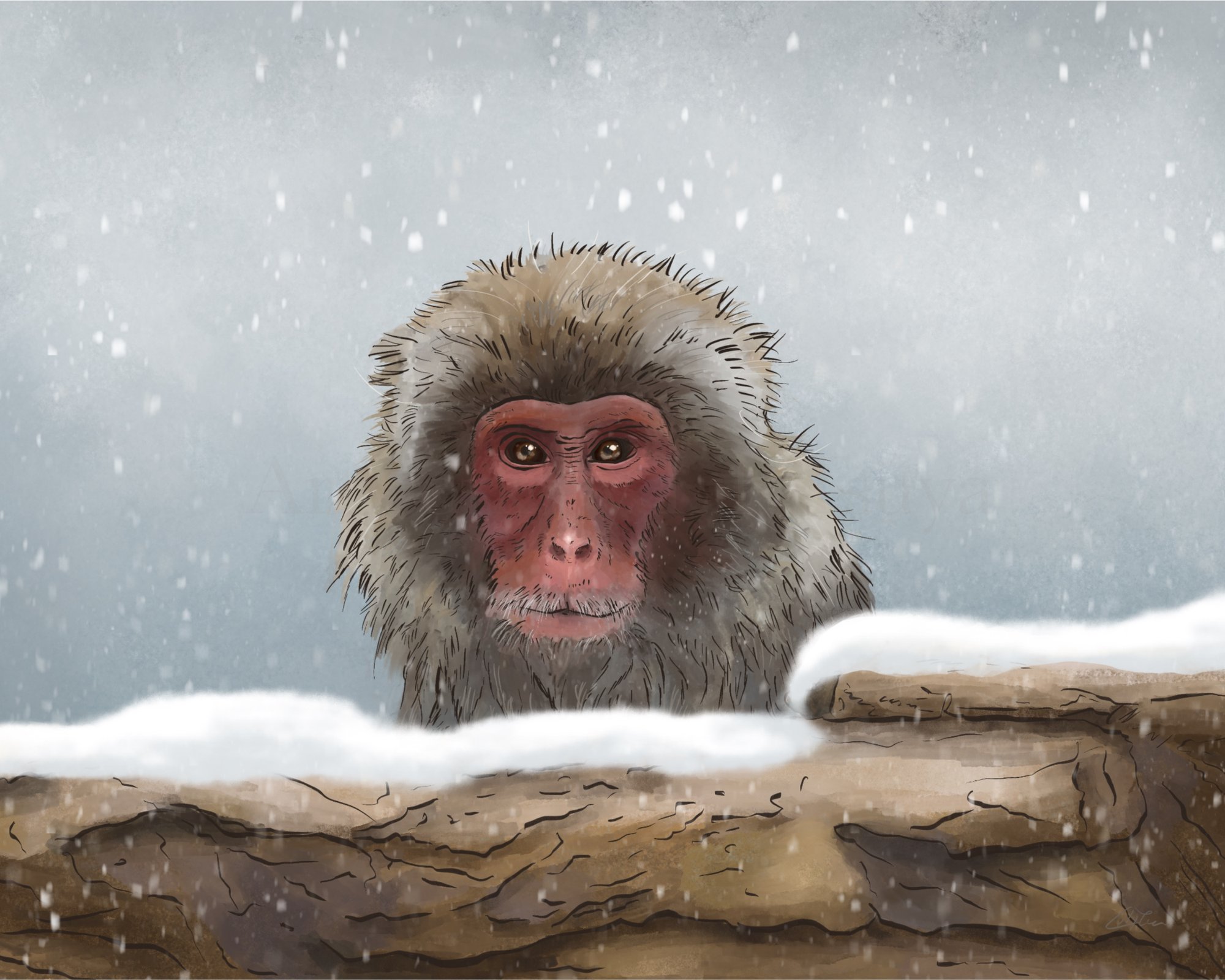
A1: My impression of monkeys has always been seeing them in trees or on the ground. I had never seen monkeys enjoying hot springs just like humans, which struck me as a truly interesting scene.
Q2: The competition theme is "The Wild Gaze." When capturing the main subject's vibrant eyes, what emotion did you most want to convey to the audience?
A2: When I looked into the macaque's eyes, I felt almost drawn in, unable to look away. It was as if it was trying to tell me something, and I wanted to understand it. I wanted to use this approach to allow everyone to experience that same sense of being drawn in.
Q3: The serene, snowy landscape in the artwork forms a strong contrast with the monkey's sharp, intense gaze. How did you approach designing this atmosphere of "cold versus warmth" and "stillness versus movement"?
A3: I enjoy these unique contrasts. Nothing is ever just one-sided, and bringing out differences across different layers makes the whole piece much more interesting.
Q4: As a digital illustration, what specific brushes or drawing techniques did you use to render the falling snow and the texture of the animal's fur?
A4: I used round brushes with blended strokes to paint the snow accumulated on the rocks, and a snow-footprint brush to create the feeling of falling snow. For the fur, I used fine-liner pen brushes and blended various colors together.
Q5: The monkey peeks out from behind a snow-covered rock. Was there a specific consideration behind this layering and compositional arrangement?
A5: I wanted to make sure the macaque didn't feel too monotonous, giving the viewer a stronger sense of the surrounding environment and its changes.
Q6: The overall image leans toward cool tones, yet the monkey's eyes and face become the main focal point. Did you encounter any challenges during the color grading process?
A6: I couldn't let the eyes become too dark overall. Instead, I added subtle shadows and highlights around the eyes to ensure the intensity of the gaze wouldn't get washed out.
Q7: When depicting wild animals, do you find it more difficult to capture their physical features or their inner spirit and soulful nature?
A7: Capturing their inner spirit and soulful nature is definitely the hardest part. When searching for inspiration, the first thing I look at is always the eyes. While painting, I pause to reflect and stare into the eyes of the animal in my artwork to see if I myself get pulled into that gaze.
Q8: Congratulations on taking 1st place in the August Unbound Artist Awards! How did you feel the moment you found out you won? What does this award mean for your artistic career?
A8: I was extremely excited to have my work seen by a broader audience and to know that people genuinely enjoy my art. It means a lot that viewers can draw different or shared thoughts and feelings from it.
Q9: How does this piece showcase your overall illustration style? Does it represent a shift in your recent creative direction?
A9: I would say I enjoy exploring many different creative styles. I will keep experimenting with diverse approaches to share my love for art.
Q10: What advice or encouragement would you give to fellow creators looking to enter international digital illustration competitions?
A10: Simply keep experimenting and drawing as much as you can—never limit your own potential. Whenever an idea or a spark of creativity strikes, write it down immediately. Those ideas will always become invaluable assets for your future portfolio.